
 Card Game DB

 Sign In
 Create Account
Welcome to Card Game DB
Register now to gain access to all of our features. Once registered and logged in, you will be able to create topics, post replies to existing threads, give reputation to your fellow members, get your own private messenger, post status updates, manage your profile and so much more. If you already have an account, login here - otherwise create an account for free today!
Register now to gain access to all of our features. Once registered and logged in, you will be able to create topics, post replies to existing threads, give reputation to your fellow members, get your own private messenger, post status updates, manage your profile and so much more. If you already have an account, login here - otherwise create an account for free today!
 0
0

The Grand Melee - Three's a Crowd, Five's a Riot
Oct 24 2013 05:10 AM |
emptyrepublic
in Game of Thrones
Small Council The Grand Melee emptyrepublic Hello everyone, Empty Republic here. It’s been a while, but we are back with another installment of The Grand Melee! This week we’ll cover some of the dynamics of melee play and the quirks of the varying number of players participating.
The Basics
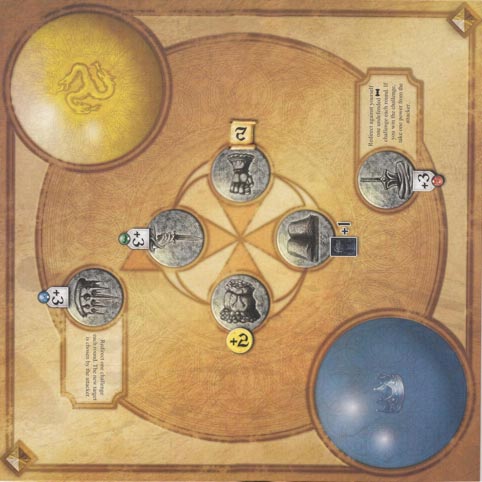
Before we start going into the quirks let’s cover the basics.
If there are at least three people playing against each other the format of the game is Melee involving the Small Council game board. The key thing about the small council is the relationship between the various titles.
- The Master of Whispers and the Master of Laws oppose each other.
- The Master of Whispers opposes the Crown Regent (the Regent opposes no one).
- The Master of Coin and the Hand of the King oppose each other.
- The Lord Commander of the Kingsguard opposes no one and is not opposed by anyone.
- The Hand of the King supports the Master of Whispers.
- The Master of Whispers supports the Master of Coin.
- The Master of Coin supports the Master of Law.
- The Master of Law supports the Hand of the King.
If a player holds a title supporting another title the player holding the supporting title cannot declare challenges against the player of title they are supporting. If the player they are supporting cannot or chooses not to defend a challenging the supporting player can choose to defend the challenge for them by declaring at least one character as a defender in the challenge.
Oppression of the Third Player
The core rules of A Game of Thrones: The Card Game operate in the context of a 4 player game (note that Joust or 2 player format is considered a variant in the core rules). However, the rules allow for three players. The only difference rules wise is that in three player play all titles must be exhausted before they are returned to the game board. What this means is that only on every odd numbered turn are all the titles available for selection. On even numbered turns only half of the titles are available for selection.
That is not the issue with the three player format of Melee Game of Thrones however. The problem is what I would describe as “oppression of the third playerâ€.
In a three player game the dynamics can occasionally introduce an imbalance that works against one the players. Let’s consider the worst case scenario…
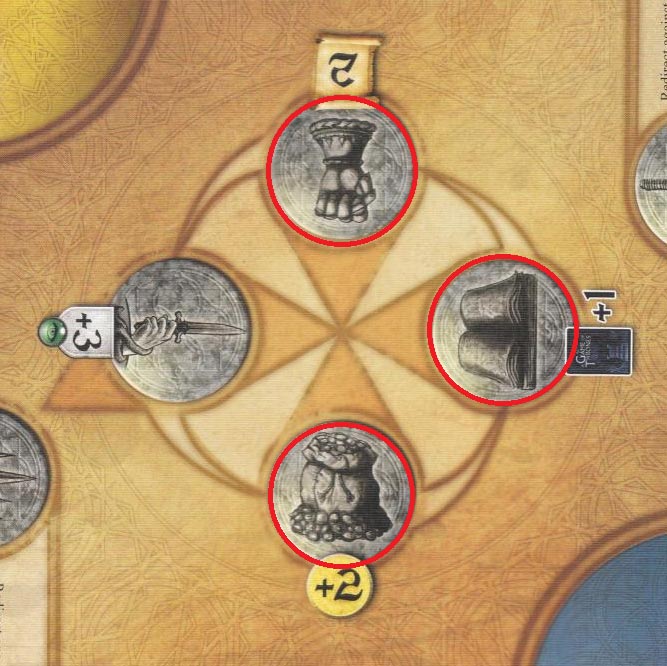
Three titles have been chosen. The Hand of the King (HoK), Master of Laws (MoL) and the Master of Coin (MoC). From my own personal experience this is an extremely common scenario in three player games. As MoC and MoL are very popular titles to have they are often picked first with the HoK often picked as a defensive measure against the player who picked MoL.
This creates a situation that is essentially unique in three player games. As previously mentioned, the relationships between the titles in the small council have now made it so that the MoC and the MoL have only one target in which they can initiate challenges against. The HoK has the benefit of attacking either the MoL or the MoC. This scenario does not exist in any other format of Game of Thrones play.
There is a fundamental problem with this scenario: the MoC is the “oppressed playerâ€. S/he is subject to potential attack from the other two players and could have to defend up to 6 challenges (or more depending on decks). The MoL has no choice; if s/he wants to win challenges to eventually win the game the MoC is the only potential target. Additionally, while the HoK could attack the MoL, the HoK is compelled to win at least one challenge against the MoC due to the additional power to be gained from the opposing titles.
Now, obviously position in the small council is not the only dynamic in play. The respective boards of each player matters as well as the power status. Despite being the oppressed player the MoC might have a strong position or the MoL/HoK have a very weak one. The issue remains though that the MoL and HoK have a “safety advantage†that the MoC does not enjoy.
Let’s consider another scenario…
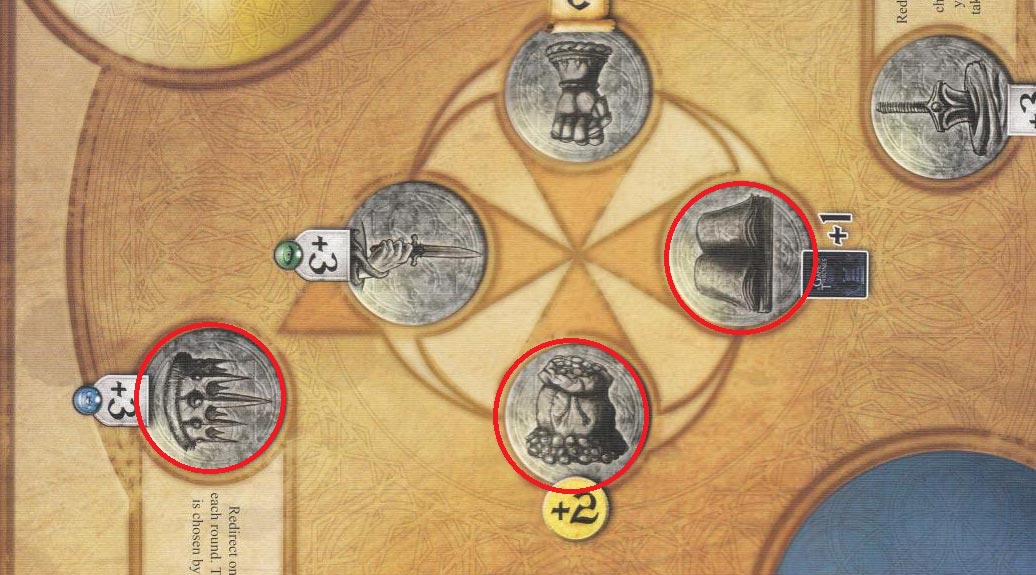
This scenario is marginally better than the previous one. Here the Crown Regent (CR) has been chosen instead of the HoK. The CR and the MoL both have two targets for their attacks without any incentive to attack any particular player. The MoC is still stuck attacking only one person but wouldn’t be considered an “oppressed player†since his/her opponents have more than one target for attacks.
There is still an issue though. The ability of the CR title is rendered null when the MoC attacks it. The rules stipulate that the redirect of the CR title only works if the attacking player has another legal target. In this case if the MoC is attacking the CR the only legal target is the CR so a substantial amount of the power of the CR is lost.
Finally, the most ideal scenario in three player would be this…
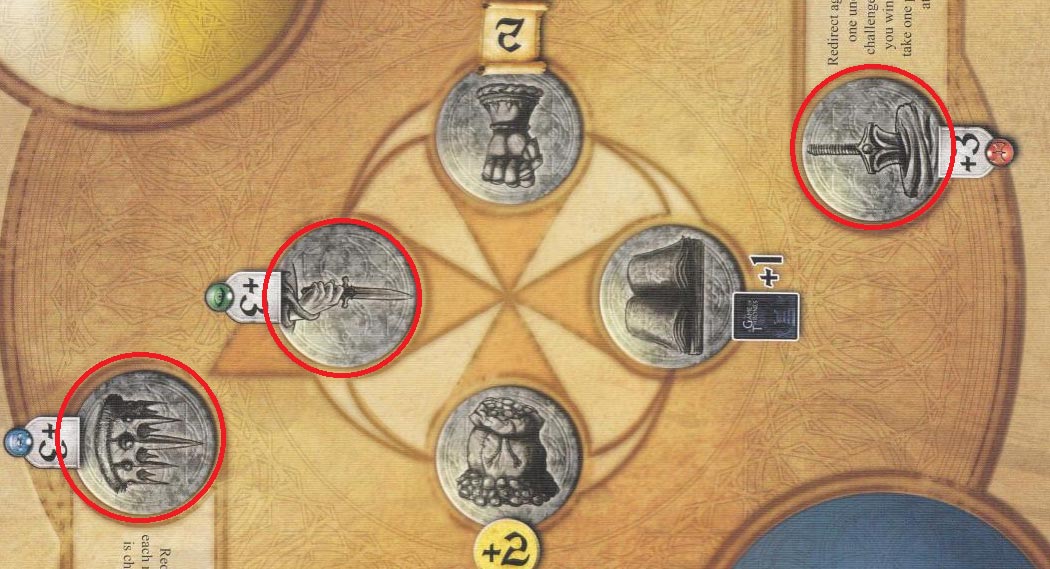
This scenario would occur the turn following the scenario initially presented as the HoK, MoL and MoC would be unavailable. Here things are much better balanced. The CR title would function fully and all players have the capacity to attack all the other players so no player has a “safety advantageâ€.
Five Players or More
A few thoughts on player with more than four people. Officially A Game of Thrones: The Card Game lists 2-4 players however mechanically there’s nothing to prevent a game from having more than that. Personally, I have played a few five player games and have heard of people playing six player games.
In general though, I do not like games with more than four players. There are various reasons for this.
- Games can be obscenely long. Four player games already take some time. Introducing more players just make things take longer.
- Tracking game effects become even more difficult. Despite being an experienced player with a solid grip on the rules I still fall into the trap of forgetting about a plot or character effect in play. Having five players further compounds that to the point where interacting, overlapping or opposing effects substantially increase the difficulty to keep track of what’s going on, even for experienced players.
- An even greater tendency for “ganging upâ€.
Concluding Thoughts
For multiplayer four is definitely the sweet spot; as the game was designed. No one player enjoys a particularly good “safety advantage†over any other since all players will be subject to attack from at least two other players. Additionally, card interactions don’t become so excessive as to be burdensome to track which would occur in 5+ player matches.
All that said though, I still enjoy three player games myself keeping in mind that the mechanics of the small council sometimes setup a situation that isn’t optimal. Nonetheless, if you play GoT with only two other people keep in mind your position in the small council and avoid being the oppressed third player unless you are confident you can handle the other two potentially ganging up on you.
- bigfomlof, scantrell24 and 14Shirt like this


15 Comments
Now, I'll agree that 3 player melee plays differently from 4 player melee (and also that 5+ player is a hell of a lot of interaction and not worth the bother - unless you go Kingsmoot, maybe). But part of the specificity in 3 player game is taking the next turn into account when choosing a Title (especially if you're last) as well as paying attention to the problem you pointed out (to avoid being oppressed either this turn or the next). Initiative and First Player choice become even more important.
Also, I don't see the influence Title picked so often, unless there's a player with influence-based effects in the game (when the Titles were created in the CCG, gold wasn't available beyond the Marshalling phase and all houses had influence-based effects for the rest of the turn). Crown Regent gives +3 STR in Power challenges, so it's not completely uselesswithout the redirection (in your scenarios, the last player could have picked the Lord Commander, which also gives a STR bonus in a challenge type).
I'm curious how this worked out. It's interesting in that you still get the benefit of the cards that have the "more than one opponent effect" but by always keeping the field open so no "oppression". The only downside I can think of is that you reduce the value of being first player since you don't get your choice title bonus; nor do you get the benefit of being last player and choosing a title to protect you from another player.
Though I love what Khudzlin said about the French TOs... that would rock. If we could completely avoid 3-player melee competitively, I'd be all for it.
I love I fight to win. It's auto-include in all my melee decks.
Problem is it makes the Masters of Whispers weaker and the Crown Regent stronger than they should be. Maybe if you kept the "opposes" portion and just removed the "supports" element, since that's the whole crux of the problem.
Crown Regent
Hand of the King
Lord Commander of the Kingsguard
Master of Laws
Master of Coins
Master of Whispers.
Could somebody add this cards?